Fire Extinguisher Ball How It Works: In today’s fast-paced world, fire safety should never be compromised. With the growing threat of accidental fires in homes, vehicles, commercial spaces, and industries, it’s vital to equip yourself with modern firefighting tools. One such revolutionary product is the Fire Extinguisher Ball—an automatic fire suppression solution. This guide explains what a fire extinguisher is, how the extinguisher ball works, the types available, and why Speciality Geochem is the ideal provider for this life-saving innovation.
What Is a Fire Extinguisher?
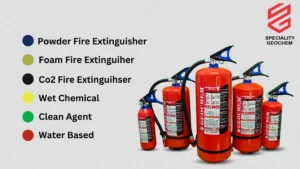
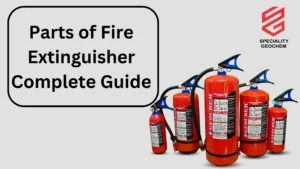
A fire extinguisher is a portable device used to put out small fires in emergency situations. Typically filled with extinguishing agents like dry powder, foam, CO₂, or water, it works by removing one or more elements of the fire triangle: heat, fuel, or oxygen.
Importance of Fire Extinguishers
- Provides immediate response during a fire outbreak
- Minimizes damage to property
- Can save lives
- Often required by building safety regulations
Traditional fire extinguishers require human effort and presence, which isn’t always practical. That’s where the fire extinguisher ball steps in as an automatic and user-friendly solution.
How Does a Fire Extinguisher Ball Work?
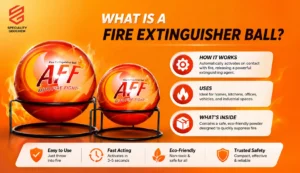
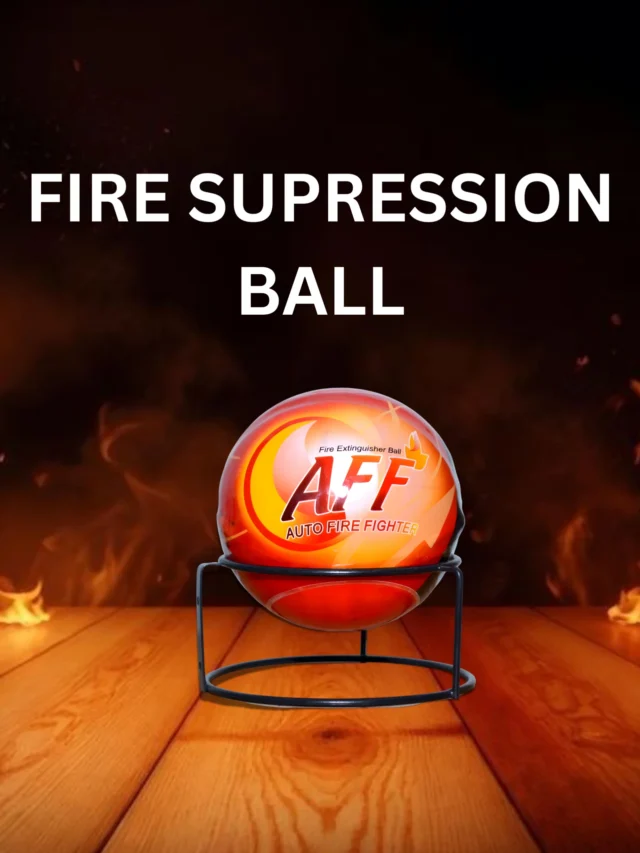
The fire extinguisher ball is an automatic fire suppression device that activates when it comes into direct contact with flames, making it a reliable fire safety product for homes and workplaces. Shaped like a lightweight sphere (usually 1.3 to 1.5 kg), it is filled with a dry chemical powder, typically mono ammonium phosphate.
Activation Mechanism
- When the ball is thrown into or placed near the fire, the outer shell bursts upon flame contact (within 3–5 seconds).
- A loud bang (around 120–140 decibels) alerts people nearby.
- The inner dry powder rapidly disperses and suppresses the fire by smothering flames and cutting off oxygen.
It requires no human operation, making it ideal for areas that might be unattended during an emergency—such as storage units, electrical panels, kitchens, and even vehicles.
Types of Fire Extinguishers
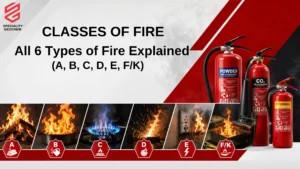
Understanding the types of fire extinguishers is crucial to choosing the right one for your environment. Fire extinguishers are categorized based on the type of fire they are designed to combat:
Class A – Ordinary Combustibles
Used for fires involving paper, wood, cloth, and plastics.
Class B – Flammable Liquids
Effective against gasoline, oil, paint, and other flammable liquids.
Class C – Electrical Fires
Best for live electrical equipment such as computers and circuit panels.
Class D – Combustible Metals
Used in industrial fires involving magnesium, sodium, or aluminum.
Class K – Kitchen Fires
Specifically designed for cooking oils and fats.
Where Does the Fire Extinguisher Ball Fit?
The fire extinguisher ball is typically effective on Class A, B, and C fires, making it versatile for domestic and commercial use. It may not be suitable for Class D (metal fires) or Class K (kitchen grease fires) unless specifically designed for them.
Why Choose Fire Extinguisher Ball?
Advantages of Fire Extinguisher Ball
- Automatic Activation
The ball activates by itself when it detects fire—perfect for passive fire protection. - No Training Required
Unlike traditional extinguishers, there’s no need for special training to operate it. - Lightweight and Easy to Install
You can place it on walls, ceilings, near circuit boards, in vehicles, or kitchens. - Non-Toxic and Environmentally Friendly
The extinguishing agents are safe for humans, pets, and electronics. - Cost-Effective
It has a long shelf life (usually 5 years) with minimal maintenance required. - Dual Function: Detection + Suppression
It not only suppresses fires but also provides an audible alert when triggered.
Applications of Fire Extinguisher Ball
Residential Use
Mount near gas stoves, in living rooms, or near electrical boards.
Commercial Spaces
Install in shops, offices, schools, restaurants, or godowns where fire risk is high.
Industrial Use
Ideal for manufacturing units, server rooms, and transformer areas.
Automobiles
Can be used inside buses, cars, and trucks for engine bay protection.
Installation Tips
- Place it in fire-prone zones (up to 1.5m above ground level).
- Use the wall mount brackets provided.
- Always keep it away from direct sunlight or extreme temperatures.
Fire Extinguisher Ball How It Works: Conclusion
Fire safety should be simple, quick, and effective. The fire extinguisher ball provides a modern, automatic, and affordable solution to suppress fires before they become disasters. Whether you’re a homeowner, a vehicle owner, or a business operator, this small device can make a big difference.
At Speciality Geochem, we are committed to protecting lives and property through innovation in fire safety technology. Explore our range of fire extinguisher balls today and take a proactive step toward a safer tomorrow.
Frequently Asked Questions About Fire Extinguisher Ball
1. Does a fire extinguisher ball work without human intervention?
Yes. A fire extinguisher ball is designed to activate automatically when it comes into direct contact with flames. Once triggered, it bursts and releases dry chemical powder that suppresses the fire within seconds. This makes it useful in areas where a person may not be present to operate a traditional extinguisher.
2. How quickly does a fire extinguisher ball activate when exposed to fire?
A fire extinguisher ball typically activates within 3–5 seconds of direct flame contact. The outer shell bursts due to heat, dispersing extinguishing powder across the surrounding area. This rapid activation helps stop small fires before they spread further.
3. What type of extinguishing agent is inside a fire extinguisher ball?
Most fire extinguisher balls contain mono ammonium phosphate dry chemical powder. This compound interrupts the chemical reaction of fire and forms a barrier between fuel and oxygen. It is widely used because it works effectively on several common fire types.
4. Which fire classes can a fire extinguisher ball handle?
A fire extinguisher ball is generally effective against Class A, B, and C fires. These include fires involving solid materials like wood and paper, flammable liquids such as petrol or oil, and electrical equipment. It is not designed for metal fires or specialized commercial kitchen fires unless specifically engineered for those conditions.
5. Where should a fire extinguisher ball be installed for best performance?
Fire extinguisher balls should be installed near high-risk fire zones such as electrical panels, kitchen areas, storage rooms, and engine compartments. They are usually mounted about 1 to 1.5 meters above ground level using a bracket. Proper placement ensures the ball can activate quickly when flames appear.
6. Is a fire extinguisher ball safe to use around people and electronics?
Yes. The dry chemical powder released from the ball is generally non-toxic and safe for use around people and pets. It also causes less damage to electrical equipment compared with water-based suppression methods.
7. Can a fire extinguisher ball replace traditional fire extinguishers?
A fire extinguisher ball should be viewed as a complementary fire safety device rather than a full replacement. Traditional extinguishers are still necessary for manual firefighting and regulatory compliance in many buildings. The ball adds an extra layer of automatic fire protection.
8. How long does a fire extinguisher ball last before replacement?
Most fire extinguisher balls have a shelf life of around five years. During this period they require very little maintenance compared with traditional extinguishers. After the recommended lifespan, they should be replaced to ensure reliability.
9. Does a fire extinguisher ball produce a warning sound when activated?
Yes. When the ball bursts, it produces a loud sound of around 120–140 decibels. This noise acts as an alert, informing nearby people that a fire has been detected and suppressed.
10. Can a fire extinguisher ball be used in vehicles?
Yes. Fire extinguisher balls are often used inside vehicles such as cars, buses, and trucks. They are particularly useful in engine compartments or electrical areas where fires can start suddenly.
11. What maintenance does a fire extinguisher ball require?
Maintenance requirements are minimal compared with standard extinguishers. Users should periodically check that the ball is properly mounted and not damaged or exposed to extreme heat. As long as it remains intact, it stays ready for automatic activation.
12. How large of a fire can a fire extinguisher ball control?
A fire extinguisher ball is designed to suppress small fires in their early stages. It works best when the fire is localized and has not spread widely. For large fires, professional firefighting systems and emergency response are still required.