Which Gas is Used in Fire Extinguisher Cylinders?
Carbon dioxide (CO2) is the primary gas used in fire extinguisher cylinders because it quickly removes oxygen and cools the fire. Other gases such as nitrogen and modern clean agents are also used in specialized fire protection systems. This article explains how each fire extinguishing gas works and where it is used.
Why Gas is Used to Extinguish Fire – The Fire Triangle
Fire exists when three elements combine: fuel, heat, and oxygen. This relationship is known as the fire triangle. Remove any one element and the fire stops.
Gas based extinguishers work by interrupting this triangle. A fire extinguishing gas either displaces oxygen around the flames or absorbs heat to cool the burning material. Because gases spread rapidly, extinguisher gas systems are especially effective for electrical equipment, machinery rooms, and enclosed spaces where water or foam may cause damage.
Which Gas is Used in Fire Extinguisher Cylinders? All Types Explained
Not all fire extinguisher gases are the same. Here is a breakdown of every gas used in fire suppression:
Carbon Dioxide (CO2): The Most Common Fire Extinguisher Gas
Carbon dioxide is the most widely used fire extinguisher gas in industrial and commercial environments. When discharged, CO2 rapidly expands from liquid to gas, forming a cold cloud that displaces oxygen around the fire and reduces the temperature of the burning material.
Because CO2 leaves no residue after discharge, it is ideal for environments where cleanup must be minimal. Unlike powder extinguishers, it does not contaminate electronics or machinery. The gas also does not conduct electricity, which makes it safe for electrical fires involving live equipment.
Fire Classes it fights: Class B and Class C fires involving flammable liquids and electrical equipment.
Best for:
- Electrical panels and server rooms
- Industrial machinery and control systems
- Laboratories and office equipment areas
One limitation: CO2 does not penetrate solid materials well, so it is less effective for deep seated Class A fires such as wood or paper.
Many facilities also install CO2 units alongside ABC dry chemical extinguishers for broader protection.
Nitrogen: Pressurizing Gas in Dry Chemical Extinguishers
Nitrogen is not typically the extinguishing agent itself. Instead, it is used as a pressurizing gas inside many portable extinguishers. In systems such as ABC dry chemical extinguishers, nitrogen pushes the powder out of the cylinder when the valve is activated.
Because nitrogen is stable, inert, and non reactive, it safely maintains internal pressure for long periods without affecting the extinguishing agent. This allows extinguishers to remain ready for emergency use.
Fire Classes it supports: A, B, and C when used in dry chemical systems.
Best for:
- Portable multipurpose extinguishers
- Warehouses and manufacturing floors
- Commercial kitchens and retail spaces
One limitation: nitrogen itself does not suppress fire. It only acts as a propellant for powder or other agents.
FM-200 / Novec 1230 (Clean Agent Gases)
Clean agent systems use advanced fire extinguishing gases designed to protect sensitive equipment. FM-200 and Novec 1230 are widely used in server rooms, telecom facilities, and data centers where traditional extinguishers could cause costly damage.
These gases extinguish fire mainly by absorbing heat from the flame. The process reduces the temperature of combustion below the level required to sustain burning. Unlike powder systems, clean agents leave no residue and require minimal cleanup.
Fire Classes it fights: A, B, and C.
Best for:
- Data centers and IT infrastructure
- Museums and archival storage
- Medical laboratories and telecom facilities
One limitation: clean agent systems are significantly more expensive than standard portable extinguishers.
Inert Gas Blends (IG-55, IG-541, Argon and Nitrogen Mix)
Inert gas suppression systems use mixtures of natural gases such as argon and nitrogen. These systems reduce the oxygen concentration in a room to a level where combustion cannot continue, while still allowing people to breathe safely for a short evacuation period.
Because these gases occur naturally in the atmosphere, they have minimal environmental impact. They are commonly installed in high value facilities that require continuous protection.
Fire Classes it fights: A, B, and C.
Best for:
- Data centers
- Power generation facilities
- Industrial control rooms
One limitation: large storage cylinders are required, which means higher installation space requirements.
Halon (Historical Fire Suppression Gas)
Halon was once one of the most effective fire extinguisher gases used in aviation, military equipment, and electronics protection. It suppressed fires by interrupting the chemical chain reaction of combustion.
However, halon gases were found to damage the ozone layer. Because of this environmental impact, production was phased out under the Montreal Protocol. Today halon systems are rarely installed, and most facilities use clean agent alternatives instead.
Fire Classes and the Right Gas Extinguisher for Each
Choosing the correct gas fire extinguisher depends on the type of fire risk present in a facility.
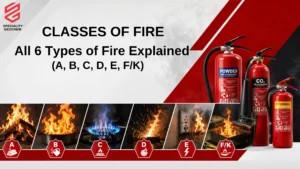
| Fire Class | Fuel Type | Recommended Gas/Agent | Example Scenario | Not Suitable |
|---|---|---|---|---|
| Class A | Wood, paper, textiles | Water mist or dry chemical | Office storage rooms | CO2 alone |
| Class B | Flammable liquids | CO2 or foam | Fuel storage or chemical labs | Water |
| Class C | Electrical equipment | CO2 gas extinguisher | Electrical panels and servers | Water based systems |
| Class D | Metal fires | Specialized dry powder | Metal machining plants | CO2 |
| Class K/F | Cooking oils and fats | Wet chemical agent | Commercial kitchens | Dry powder |
For Class B and C fires in Indian industrial and office settings, high quality CO2 fire extinguisher cylinders are widely used because they leave no residue and are safe around electrical equipment. Many facilities rely on solutions supplied by Speciality Geochem, a leading manufacturer of certified CO2 systems designed for Indian safety standards.
Why CO2 Remains the #1 Gas Fire Extinguisher in India
- No residue after discharge
CO2 evaporates instantly after release. This means there is no powder or foam residue left on machinery, electronics, or documents. - Non conductive for electrical fires
Because carbon dioxide does not conduct electricity, it can safely suppress fires involving energized electrical equipment. - Rapid cooling effect
When CO2 expands from liquid to gas, the temperature drops dramatically. This cooling helps stop the combustion process quickly. - No ozone depletion
Unlike older halon systems, CO2 does not damage the ozone layer and is widely accepted under environmental regulations. - Widely available and BIS certified
In India, the gas fire extinguisher market is strongly supported by standardized manufacturing and BIS certification, making CO2 systems reliable and easy to procure for commercial and industrial use.
What About Fireball Extinguishers – Which Gas Do They Use?
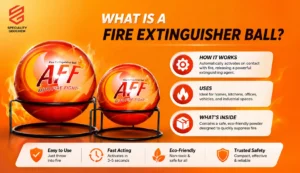
A fireball extinguisher operates differently from a traditional gas fire extinguisher. Instead of relying on compressed gas, the ball contains a dry chemical powder agent, typically monoammonium phosphate. When exposed to flames, the device bursts and disperses the powder automatically.
This powder interrupts the chemical reaction of combustion and quickly suppresses small fires. Because activation happens without human intervention, the fireball extinguisher is often placed near electrical panels, vehicles, or storage areas as an automatic protection layer.
Safety Precautions When Using a Gas Fire Extinguisher
- Avoid discharging CO2 in confined spaces without ventilation. High concentrations can reduce oxygen levels and create breathing risks.
- Always aim the nozzle at the base of the fire. Targeting the fuel source ensures the extinguishing gas can disrupt the combustion process effectively.
- Do not hold the discharge horn directly during operation. The horn becomes extremely cold due to rapid gas expansion and may cause frost burns.
- Inspect pressure gauges and service tags regularly. Scheduled maintenance ensures the extinguisher gas remains at proper operating pressure.
Frequently Asked Questions (FAQ)
Which gas is used in fire extinguisher cylinders?
Carbon dioxide is the most common gas used in fire extinguisher cylinders, particularly for electrical and flammable liquid fires. Other gases such as nitrogen, FM-200, Novec 1230, and inert gas blends are used in specialized suppression systems. The choice depends on the type of fire risk and the environment being protected.
Which gas is used to extinguish fire most effectively?
Carbon dioxide is considered one of the most effective gases for quickly suppressing fires involving electrical equipment and flammable liquids. It works by displacing oxygen around the flame and cooling the burning material. Clean agent gases such as FM-200 are also highly effective in sensitive environments like data centers.
Which gas is used for fire extinguisher in electrical fires?
CO2 is widely used for electrical fires because it does not conduct electricity and leaves no residue after discharge. This makes it safe for protecting electrical panels, servers, and industrial control systems where water or foam could cause equipment damage.
Is CO2 safe to use indoors?
CO2 extinguishers can be used indoors, but proper ventilation is important after discharge. High concentrations of carbon dioxide may reduce oxygen levels in enclosed spaces. For small fires in offices or industrial rooms, CO2 extinguishers are widely used when handled according to safety guidelines.
What is the difference between CO2 and clean agent gas fire extinguishers?
CO2 extinguishers suppress fire by displacing oxygen and cooling the flames. Clean agent systems such as FM-200 work mainly by absorbing heat from the combustion process. Both leave no residue, but clean agents are typically installed in fixed fire suppression systems for sensitive equipment environments.
Gas Used in Fire Extinguisher Cylinders Conclusion
Carbon dioxide remains the primary answer to the question which gas is used in fire extinguisher cylinders. While other gases such as nitrogen and clean agents play specialized roles, CO2 continues to dominate portable extinguisher systems because of its effectiveness, safety for electrical fires, and easy availability.
If you are sourcing certified equipment for your facility, working with a trusted fire extinguisher cylinder manufacturer ensures compliance with Indian safety standards and reliable protection across industrial and commercial environments.