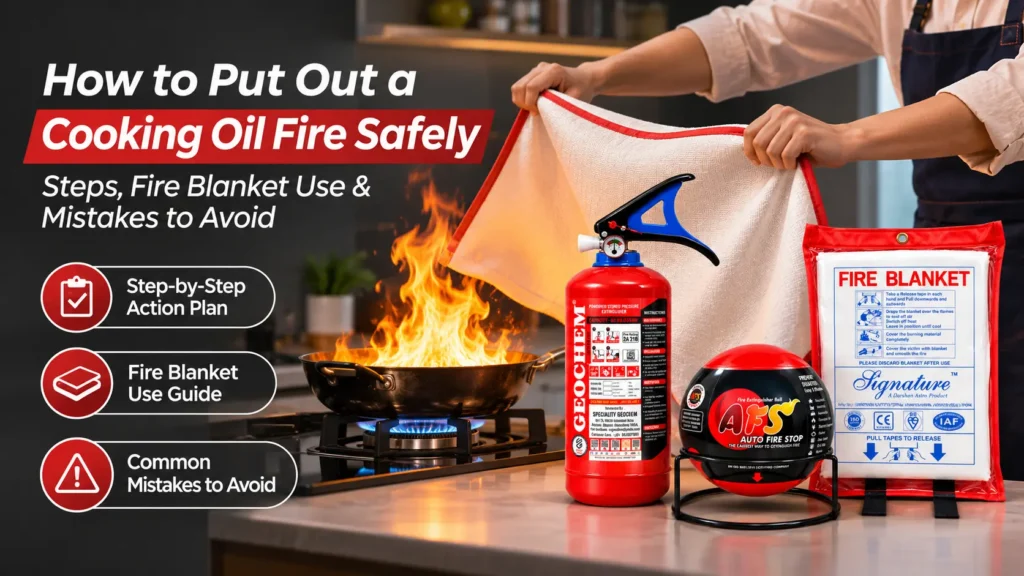
To put out a cooking oil fire, turn off the gas, cover the pan or kadhai fully with a metal lid or a fire blanket, and leave it covered until the oil cools. Don’t pour water on it and don’t move the vessel. If flames spread beyond the vessel, use an ABC extinguisher from a safe distance or leave and call 101.
Those few lines can save a kitchen. The rest of this guide explains why each step works, which equipment to keep near your stove, and the mistakes that turn a small pan fire into a house fire.
Why a kitchen oil fire behaves differently
A burning sheet of paper goes out once you take away the flame. Hot oil doesn’t. Two things make it dangerous:
- It stores heat. Oil can stay hot enough to burst into flames again long after you’ve smothered it. The fire is truly out only when the oil has cooled.
- It’s lighter than water. Water sinks through oil to the bottom of the pan, boils instantly and erupts, carrying burning oil out of the vessel.
That’s why cooking oil and fat fires are treated as a separate category in fire safety.
Step-by-step: how to put out a cooking oil fire
- Switch off the heat. Turn the burner knob off. If the LPG regulator is within safe reach and away from the flames, switch it off too.
- Grab the fire blanket or a lid. A fire blanket mounted near the kitchen door is the safest option. A large metal lid or flat tray works for smaller pans.
- Cover the vessel completely. Place the blanket or lid from the side nearest you, so your arms stay out of the flames. Cover the rim on all sides.
- Leave it alone for at least 30 minutes. Don’t lift the cover to check. Air rushing back in can reignite the oil.
- Check the chimney. Once the fire is out, look at the chimney filter and duct for smoke or glowing grease.
Mistakes to avoid with a grease fire
| Mistake | Why it’s dangerous |
|---|---|
| Pouring water | Water turns to steam under the oil and throws burning oil out of the pan |
| Carrying the pan to the sink | Burning oil spills on you and the floor |
| Turning the chimney or fan on high | Feeds the fire and can pull flames into the greasy duct |
| Throwing atta, maida or a wet towel | Flour can flash; a wet towel acts like water |
| Aiming an extinguisher into the pan from close up | The force can splash burning oil around the kitchen |
| Lifting the lid after two minutes | Hot oil reignites once air returns |
How to use a fire blanket on an oil fire
A fire blanket is the best tool to keep in a home or office kitchen for exactly this situation. Our fibreglass fire blanket for kitchen folds into a quick-release pouch that hangs on the wall.
- Pull both tapes down sharply. The blanket drops out of the pouch.
- Wrap the top edge around your hands to protect them.
- Hold it up like a shield and lay it over the vessel, away from you.
- Make sure it covers the whole rim; don’t press down on the pan.
- Leave it in place until the pan is cool to the touch.
- Replace the blanket after use.
For a full visual guide, read how to use a fire blanket.
Which fire safety equipment to keep in the kitchen
| Equipment | Role in a kitchen oil fire | Where to keep it |
|---|---|---|
| Fire blanket | First choice: smothers the burning vessel | Wall-mounted near the kitchen exit, 1.5–2 m from the stove |
| ABC fire extinguisher (2 kg) | For fire that has spread to cabinets, curtains or wiring around the stove; not to be aimed into the oil | Just outside the kitchen door or in the hallway |
| Fire extinguisher ball (1.3 kg) | Protects the kitchen’s electrical board or inverter when no one is around | Above the distribution board, not over the stove |
| 3-in-1 fire safety combo | All three of the above in one kit | As above |
Our ABC extinguisher is not designed to be aimed into burning cooking oil, and our product page says so too. Use it on what catches fire around the vessel, from 3–4 metres away. For restaurant and hotel kitchens with large deep fryers, ask a fire safety consultant to plan kitchen protection.
Prevention tips for Indian kitchens
- Fill the kadhai no more than one-third with oil for deep frying.
- Heat oil on medium flame. If it starts to smoke, lower the flame.
- Dry vegetables, paneer and fish before frying.
- Never leave hot oil unattended, not even to answer the door.
- Keep dupattas, towels and plastic packets away from the burners.
- Clean chimney filters regularly.
When to evacuate and call 101
Leave the kitchen, close the door behind you, and call 101 (fire) or 112 if:
- flames reach the chimney, cabinets or ceiling
- you can’t reach the burner knob safely
- thick smoke fills the room
- the blanket or lid hasn’t controlled the fire within seconds
First aid for oil burns
Cool the burn under cool running water for at least 20 minutes. Remove rings and bangles near the burn. Cover loosely with cling film. Don’t apply ice, butter, toothpaste or oil. Get medical help for large burns, burns on the face or hands, and any burn on a child.
Conclusion
Every safe method in this guide does two things: it cuts off air and it gives the oil time to cool. Every dangerous one, from water to waving a towel, does neither. If you remember only one thing, remember that a cooking oil fire is out only when the oil is cold. Keep a fire blanket within two steps of the stove so you never have to improvise. Protect your kitchen before the next frying session. Order the 3-in-1 fire safety combo, with a fire blanket, a 2 kg ABC extinguisher and a fire ball in one box, or buy a fire blanket for kitchen on its own.
FAQs
Q1. Can I put water on a cooking oil fire?
No. Water sinks under the hot oil, turns to steam instantly and throws burning oil into the air. This causes severe burns and spreads the fire. Turn off the heat and cover the vessel with a fire blanket or lid instead.
Q2. Is a fire blanket enough for a kitchen oil fire?
For a fire inside one pan or kadhai, yes, as long as the blanket covers the vessel completely and stays on until the oil cools. If the fire has spread to cabinets or the chimney, leave the kitchen and call 101.
Q3. Can an ABC extinguisher be used on oil?
ABC powder isn’t recommended for burning cooking oil inside the vessel; it may not cool the oil and the spray can splash it. Use the fire blanket on the vessel, and the ABC extinguisher on nearby things that have caught fire.
Q4. Where should I keep a fire blanket in the kitchen?
On the wall near the kitchen exit, about 1.5 to 2 metres from the stove, at shoulder height. Never mount it directly above the stove, where flames could stop you from reaching it.
Q5. What should I do if the fire spreads?
Stop fighting it. Get everyone out, close the kitchen door to slow the fire, and call 101 or 112 from outside. Shut the LPG cylinder valve only if you can reach it without passing the fire.