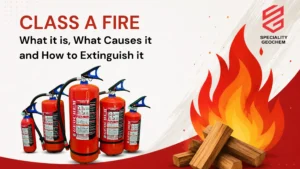
A Class A fire is a fire involving ordinary solid combustible materials such as wood, paper, cloth, rubber, cardboard, and most plastics. It is the most common type of fire globally because these materials exist in nearly every home, office, warehouse, and factory. What makes a Class A fire different from most other fire types is deep-seated combustion. Heat penetrates into the body of the fuel and not just the surface, which means the fire can continue smouldering internally long after visible flames disappear.
A cigarette slips between the cushions of a fabric sofa late at night. There is no visible flame. No alarm sounds. Two hours later, the entire room is burning because heat has been building inside the foam and timber frame the whole time. That is the hidden danger of a Class A fire.
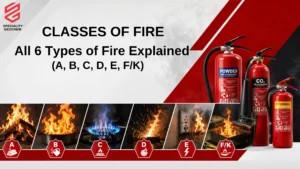
This guide explains the materials involved in Class A fires, the ignition sources, the science of smouldering combustion, why reignition happens, the correct extinguisher to use, and how to prevent these fires in homes and workplaces. For the full comparison of all fire categories, see the classes of fire guide.
- What is a Class A fire?
- What materials cause a Class A fire?
- What causes a Class A fire?
- Spontaneous combustion and hidden ignition
- Why Class A fires smoulder and reignite
- How to extinguish a Class A fire
- What 13A, 21A, 34A and 55A ratings mean
- Where Class A fires commonly occur
- Class A fire prevention checklists
- Class A vs Class B vs Class C fires
- Frequently asked questions
What is a Class A fire?
A Class A fire is any fire fuelled by ordinary solid combustible materials where combustion penetrates into the interior of the fuel and not just the surface. The practical test for a Class A material is simple: it leaves ash or char after burning.
Common Class A fuels include:
- Wood
- Paper
- Cardboard
- Cotton and wool
- Rubber
- Jute
- Most thermoplastics
- Upholstered furniture
Under BIS fire safety classifications, Class A fires are the most common fire category in residential, commercial, and industrial buildings.
What materials cause a Class A fire?
Class A fires involve solid, carbon-based materials that continue burning after ignition and leave ash or char behind.
Common Class A fire materials in homes and offices
Typical examples include:
- Wooden furniture and flooring
- Books, files, and cardboard packaging
- Curtains, carpets, and rugs
- Cotton, linen, and wool fabrics
- Clothing and bedding
- Leather products
- Rubber materials
- Plastic storage containers
Upholstered furniture is especially dangerous because it combines multiple fuels in one object: fabric, foam, timber, adhesives, and plastic components.
Class A materials in industrial and commercial settings
Industrial Class A fire loads are far larger and more severe.
Common examples include:
- Timber storage yards
- Textile mills with baled cotton
- Printing facilities storing paper reels
- Warehouses filled with cardboard cartons
- Tyre storage facilities
- Plastic raw material storage
- Jute sack warehouses
- Wooden pallet storage
In these environments, fires spread through both surface flames and internal heat transfer within stacked materials.
What causes a Class A fire?
A Class A fire begins when combustible solid materials are exposed to enough heat to ignite.
Home ignition sources
The most common residential causes include:
- Unattended candles
- Cigarettes dropped into furniture or bedding
- Overloaded extension boards
- Space heaters too close to curtains or fabric
- Children playing with lighters or matches
- Electrical overheating from loose wiring
- Cooking flames igniting nearby cloth or paper
Electrical overheating is a major cause of hidden Class A fires. Loose electrical terminals can generate heat for hours before visible smoke appears.
Workplace and industrial ignition sources
Industrial and commercial ignition sources include:
- Welding and grinding sparks
- Hot work without fire watch procedures
- Faulty electrical systems
- Friction heat from machinery
- Static discharge near combustible dust
- Overheated motors or transformers
- Improper cigarette disposal
Spontaneous combustion and hidden ignition
Spontaneous combustion is not “fire from nowhere.” It is the gradual build-up of heat inside organic materials through oxidation or decomposition until ignition occurs without an external spark.
Common spontaneous combustion Class A fire risks include:
- Oily rags soaked with linseed oil
- Damp hay storage
- Compost piles
- Agricultural waste
- Coal stockpiles
For example, oily rags release heat while drying through oxidation. If the rags are piled together, heat becomes trapped inside the material until ignition occurs internally.
These fires are especially dangerous because the combustion begins inside the fuel mass where it cannot be seen immediately.
The science of Class A fires: deep-seated combustion and reignition
Deep-seated combustion is what makes a Class A fire uniquely persistent.
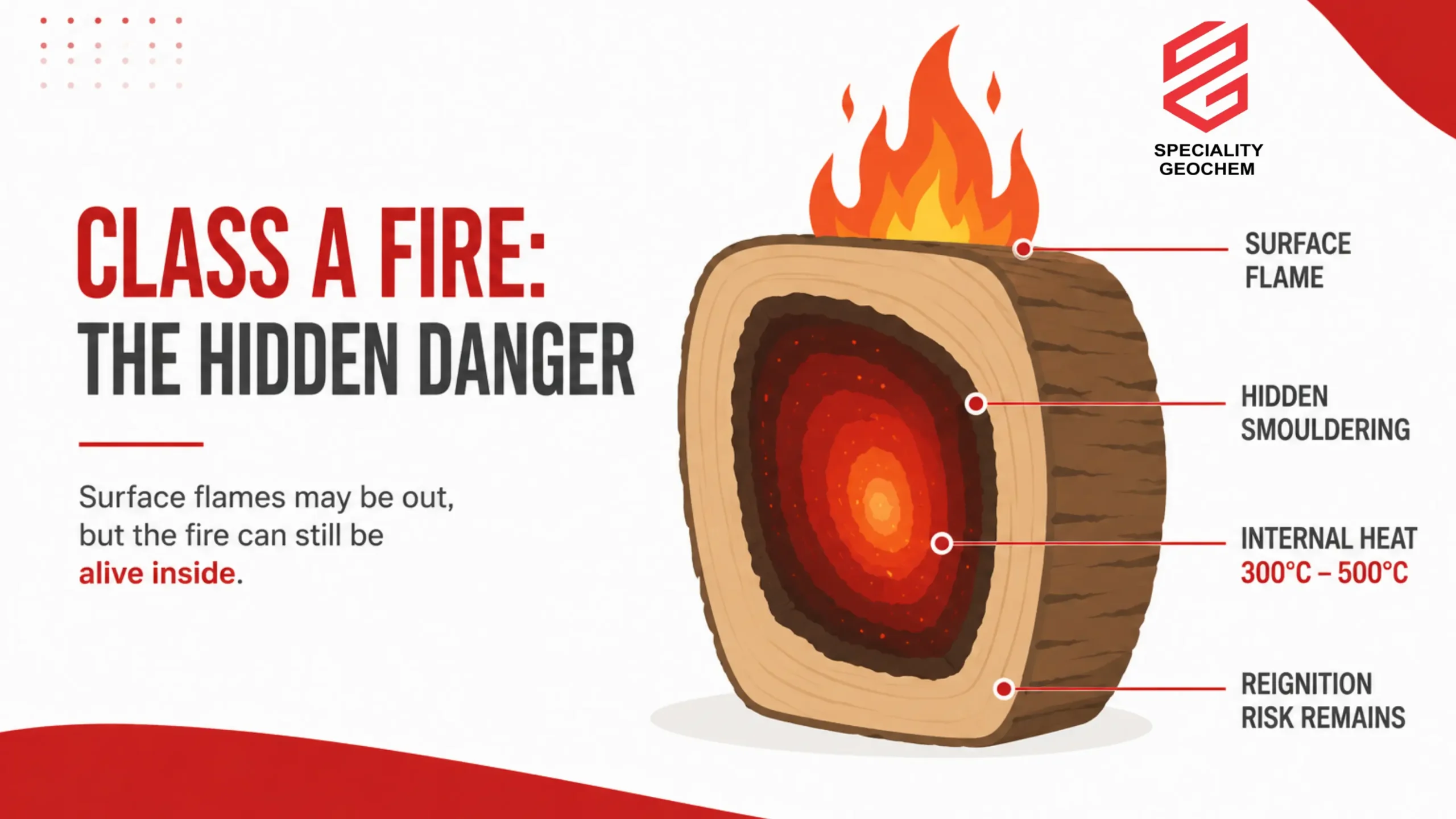
Wood, paper, cotton, cardboard, and jute are porous materials filled with microscopic air pockets. When the surface burns, heat travels inward through conduction. The interior of the material begins to chemically break down through a process called pyrolysis.
Pyrolysis releases combustible gases inside the fuel itself. But because oxygen is limited inside the material, the interior often smoulders instead of bursting into visible flame.
Internal smouldering temperatures can remain between 300°C and 500°C even when the outer surface appears extinguished.
This creates a dangerous illusion. A timber beam may look cold while the centre is still hot enough to reignite. A cardboard stack may appear wet and extinguished while internal heat remains trapped deep inside.
How long can Class A fires reignite?
Documented reignition timelines include:
- Timber structures: up to 72 hours after extinguishment
- Cotton and jute bales: reignition reported weeks later
- Coal stockpiles: smouldering can continue for months
Surface cooling alone often fails because the outer layer cools faster than the interior. In some cases, the cooled outer crust actually traps heat inside the fuel mass.
This is why firefighters perform overhaul operations after Class A fires. Materials are physically broken apart, overturned, and inspected for hidden hot spots before crews leave the scene.
How to extinguish a Class A fire
Water extinguisher: the primary Class A agent
Water is the most effective Class A extinguisher because it cools the fuel mass itself.
The goal is not simply to remove visible flames. The objective is to lower the internal temperature below ignition point and stop hidden smouldering.
Water penetrates wood, paper, cardboard, and textiles better than any other extinguishing agent.
However, tightly compressed materials such as cotton bales or stacked cardboard reduce water penetration. In industrial fires, firefighters often use wetting agents or surfactants to reduce water surface tension and improve penetration into the fuel mass.
Water type fire extinguishers are widely used for Class A fire risks in homes, offices, schools, and warehouses.
Foam extinguisher
Foam extinguishers combine water with foam concentrate.
The water provides cooling while the foam layer covers the burning surface and slows oxygen re-entry. Foam works well where burning materials are spread across floor areas.
However, foam alone still requires deep cooling and overhaul in large Class A fires.
ABC dry powder extinguisher
An ABC powder fire extinguisher rapidly interrupts the flame’s chemical chain reaction.
ABC powder is highly effective for immediate flame knockdown and is one of the most commonly installed extinguishers in Indian workplaces.
However, ABC powder provides very little cooling.
On deep-seated Class A fires involving timber, cardboard, or textiles, internal smouldering often continues beneath the powder layer. Once the powder disperses and oxygen returns, reignition occurs.
The best practice is:
- Use ABC powder for rapid flame suppression
- Follow immediately with water or foam to cool the fuel mass
CO₂ extinguisher: why it fails on Class A fires
A CO₂ fire extinguisher works by displacing oxygen around the flame zone.
This works well for electrical and flammable liquid fires. But Class A fires behave differently because the fuel remains internally hot after visible flames disappear.
CO₂ dissipates quickly in open spaces. Once oxygen returns, internally smouldering material reignites.
That is why CO₂ is generally unsuitable for deep-seated Class A fires.
Class A fire extinguisher ratings: what 13A, 21A, 34A and 55A mean
The numbers on a Class A extinguisher label represent the size of the standardised wood-crib fire the extinguisher can successfully suppress during testing.
Higher numbers mean greater firefighting capability.
| Rating | Typical Application | Environment |
|---|---|---|
| 13A | Small office or shop | Reception areas, cabins |
| 21A | Medium-risk spaces | Schools, offices |
| 34A | Industrial environments | Workshops, warehouses |
| 55A | High fuel-load facilities | Timber yards, textile mills |
A 34A extinguisher can handle a much larger Class A fire than a 13A unit.
Selecting the correct rating matters because an undersized extinguisher may empty before suppression is complete.
Where Class A fires most commonly occur
In homes
Living rooms, bedrooms, garages, and storage areas contain large amounts of combustible material including furniture, bedding, cardboard, curtains, carpets, and plastics.
In offices
Offices contain paper, wooden desks, fabric seating, carpets, and electrical equipment. Faulty wiring and overloaded sockets are common ignition sources.
In warehouses and industrial facilities
Warehouses contain concentrated fuel loads such as pallets, textile bales, paper reels, tyres, and plastics. These fires often require prolonged overhaul operations due to deep-seated combustion.
On construction sites
Construction areas contain timber framing, insulation materials, cardboard packaging, and wood-based panels. Welding and grinding sparks can ignite hidden combustibles inside wall cavities or floor voids.
Class A fire prevention checklists
Home prevention checklist
- Never leave candles unattended
- Keep candles at least 30 cm away from combustibles
- Avoid overloading extension boards
- Dispose of cigarettes in water before discarding
- Keep heaters away from curtains and clothing
- Store paper and cardboard away from heat sources
- Test smoke alarms monthly
- Replace smoke alarm batteries annually
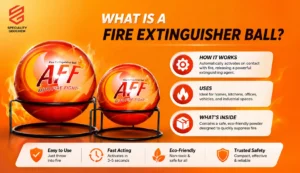
A properly placed fire extinguisher ball can also help control small early-stage fires automatically.
Workplace prevention checklist
- Implement hot work permit systems
- Store oily rags in sealed metal containers
- Empty combustible waste bins daily
- Keep storage away from electrical equipment
- Maintain clear fire exits
- Conduct fire risk assessments regularly
- Install extinguishers with suitable Class A ratings
- Train employees in extinguisher use and evacuation procedures
Class A fire vs Class B and Class C fires
| Factor | Class A | Class B | Class C |
|---|---|---|---|
| Fuel | Solid combustibles | Flammable liquids | Flammable gases |
| Combustion type | Deep-seated | Surface vapour burning | At point of release |
| Primary extinguishing method | Cooling | Smothering | Shut gas supply |
| Water effective? | Yes | No | No |
| CO₂ effective? | Poor | Yes | Limited |
| Reignition risk | High | Lower | High if supply continues |
For the full comparison of all 6 fire classes, including electrical, metal, and cooking oil fires, see the complete guide.
Class A aag kya hai? (Hindi explanation)
Class A aag wo hoti hai jo lakdi, kagaz, kapda, rubber, cardboard aur plastic jaise solid combustible materials se lagti hai. Yeh sabse common fire category hai kyunki yeh materials har ghar, office aur factory mein hote hain. Is fire ki sabse badi khasiyat deep-seated combustion hai, jahan material andar se sulagta rehta hai aur bahar ki flame bujhne ke baad bhi dubara jal sakta hai.
Frequently asked questions
What is a Class A fire?
A Class A fire is a fire involving ordinary combustible solids such as wood, paper, cloth, cardboard, rubber, and most plastics. These fires are the most common globally and are known for deep-seated combustion where materials continue smouldering internally.
What materials are involved in a Class A fire?
Class A fire materials include wood, paper, cardboard, cotton, wool, textiles, rubber, leather, and many common plastics. Any solid combustible material that leaves ash after burning usually falls into Class A.
What causes a Class A fire?
Class A fires are caused when combustible solid materials are exposed to ignition sources such as cigarettes, candles, electrical overheating, welding sparks, or open flames.
What extinguisher should be used on a Class A fire?
Water extinguishers are the preferred extinguisher for Class A fires because they cool the fuel mass and stop internal smouldering. Foam extinguishers are also effective.
Can you use a CO₂ extinguisher on a Class A fire?
A CO₂ extinguisher can suppress a small surface-level Class A fire temporarily, but it does not cool the fuel mass. Once oxygen returns, internally hot materials can reignite.
Can you use an ABC extinguisher on a Class A fire?
Yes. ABC powder extinguishers quickly suppress flames on Class A fires, but water or foam should follow for deep-seated fires to prevent reignition.
Why do Class A fires reignite?
Class A fires reignite because heat remains trapped inside the fuel mass after surface flames disappear. When oxygen returns to hidden hot spots, the material ignites again.
What is deep-seated combustion?
Deep-seated combustion is internal smouldering inside porous materials such as timber, paper, and textiles. Heat penetrates the fuel and causes combustion below the surface.
What does 13A or 21A mean on a fire extinguisher?
13A and 21A are Class A fire ratings that indicate the size of the standardised wood-crib fire an extinguisher can suppress during testing.
What is the difference between a Class A and Class B fire?
A Class A fire involves solid combustibles such as wood and paper, while a Class B fire involves flammable liquids such as petrol or solvents.
Are Class A fires the most common type of fire?
Yes. Class A fires are the most common because combustible solids exist in almost every building.
How do you prevent a Class A fire at home?
Preventing Class A fires at home involves controlling ignition sources, avoiding overloaded sockets, safely disposing of cigarettes, and keeping combustibles away from heaters.
How do you prevent a Class A fire in the workplace?
Preventing workplace Class A fires requires hot work controls, proper waste disposal, electrical maintenance, and suitable extinguisher installation.
Can water make a Class A fire worse?
Water is normally the best extinguishing agent for Class A fires. However, it should not be applied to energised electrical equipment or incompatible chemical fires.
What is spontaneous combustion and is it a Class A fire?
Spontaneous combustion is internal self-heating caused by oxidation or decomposition in combustible organic materials such as oily rags or hay. It is classified as a Class A fire because the fuel is a solid combustible material.
Conclusion
Class A fires are ordinary in appearance but unusually persistent. The visible flame disappearing does not mean the fire is fully extinguished. Hidden smouldering inside timber, textiles, cardboard, and other porous materials can continue for hours, days, or even weeks before reignition occurs.
That is why the correct extinguishing method matters. For Class A fires, the real objective is cooling the fuel mass itself, not simply knocking back the flames.
Speciality Geochem manufactures BIS-certified ABC powder fire extinguisher systems and other fire fighting equipment for industrial, commercial, and institutional use across India. For the full comparison of every fire class and the right extinguisher for each, visit the complete classes of fire guide.