
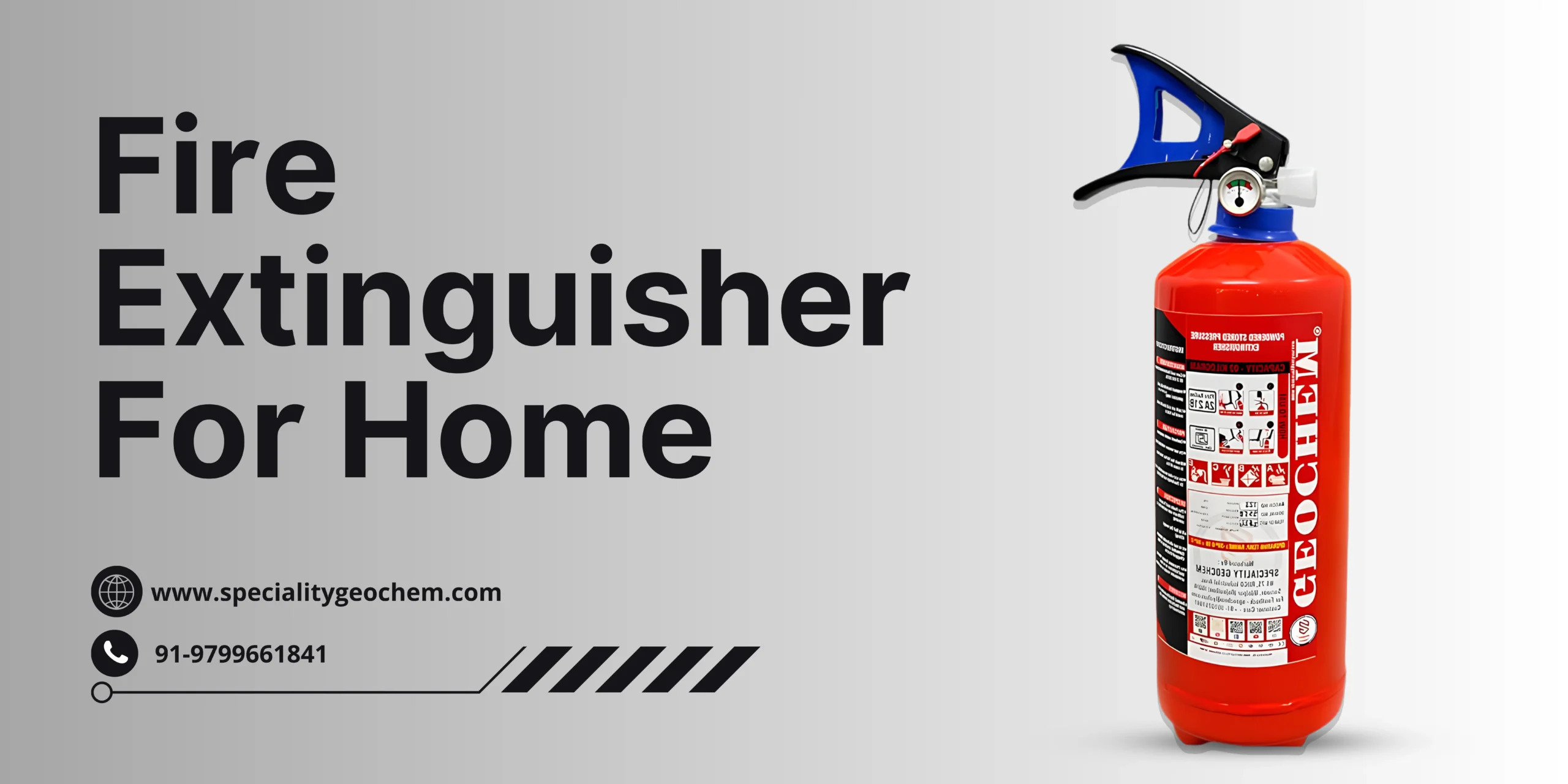
Fire Extinguisher For Home By Speciality Geochem
The best fire extinguisher for home in India is usually a 2kg ABC dry powder extinguisher, because it handles the three most common residential fire types: solid materials, flammable liquids, and electrical equipment. Many homes also add a 2kg CO2 extinguisher near electrical panels and a fire extinguisher ball in the kitchen for passive protection. ISI-certified models manufactured in India are available directly from certified manufacturers such as Speciality Geochem.
Your home is the first line of defense against fire risk, which is why choosing the right equipment matters. Speciality Geochem has been manufacturing fire safety equipment in Udaipur since 1996, supplying ISI and CE-certified fire extinguishers designed for real residential fire scenarios.
From compact ABC powder cylinders to CO2 extinguishers for electrical panels and automatic fire extinguisher balls for kitchens, the company produces equipment that meets Bureau of Indian Standards requirements while remaining practical for everyday home protection.

Why Every Home Needs a Fire Extinguisher for Home Safety
Every home carries some level of fire risk. A leaking LPG cylinder, overheated inverter battery, overloaded extension board, or unattended cooking pan can ignite within seconds. That is why installing a reliable domestic fire extinguisher is not simply precautionary. It is basic household safety equipment.
Most residential fires begin small and grow rapidly. Fire safety studies show that a flame can double in size roughly every 60 seconds. The difference between a minor incident and a destructive fire often comes down to whether a household fire extinguisher is available within reach.
Quick action in the first minute allows you to control a kitchen flare-up, electrical spark, or small furniture fire before it spreads to other rooms. Choosing the right fire extinguisher for home use gives you that immediate response capability.
Types of Fire Extinguisher for Home Use in India
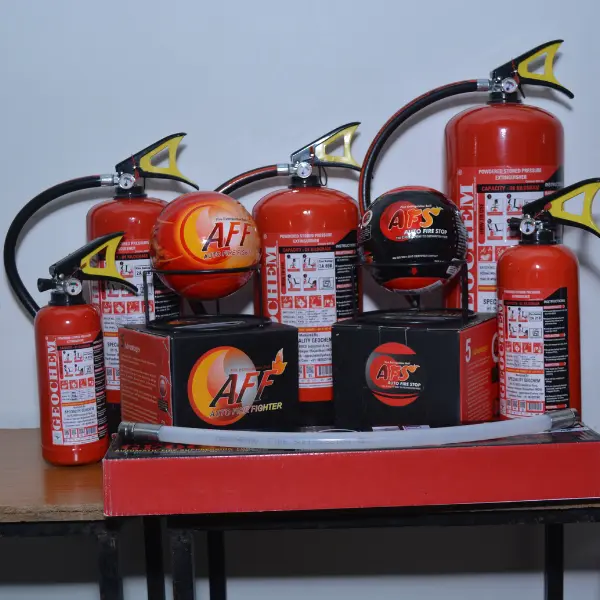
Different fire risks require different extinguishing agents. A kitchen oil fire behaves very differently from an electrical short circuit or burning furniture. That is why homeowners should never rely on just one type of extinguisher. Speciality Geochem manufactures five core types of fire extinguisher for home use, each designed to handle specific fire classes while meeting Bureau of Indian Standards safety requirements.
Each model below addresses a different risk commonly found in Indian homes, from electrical appliances to cooking oil fires.

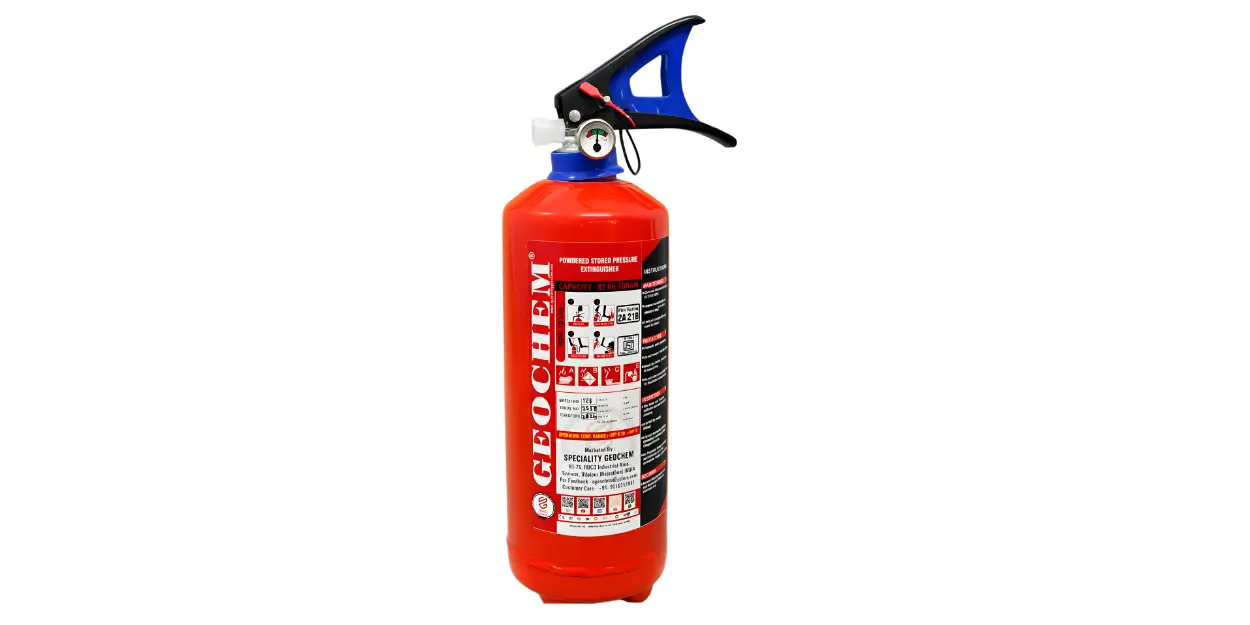
ABC Powder Extinguisher
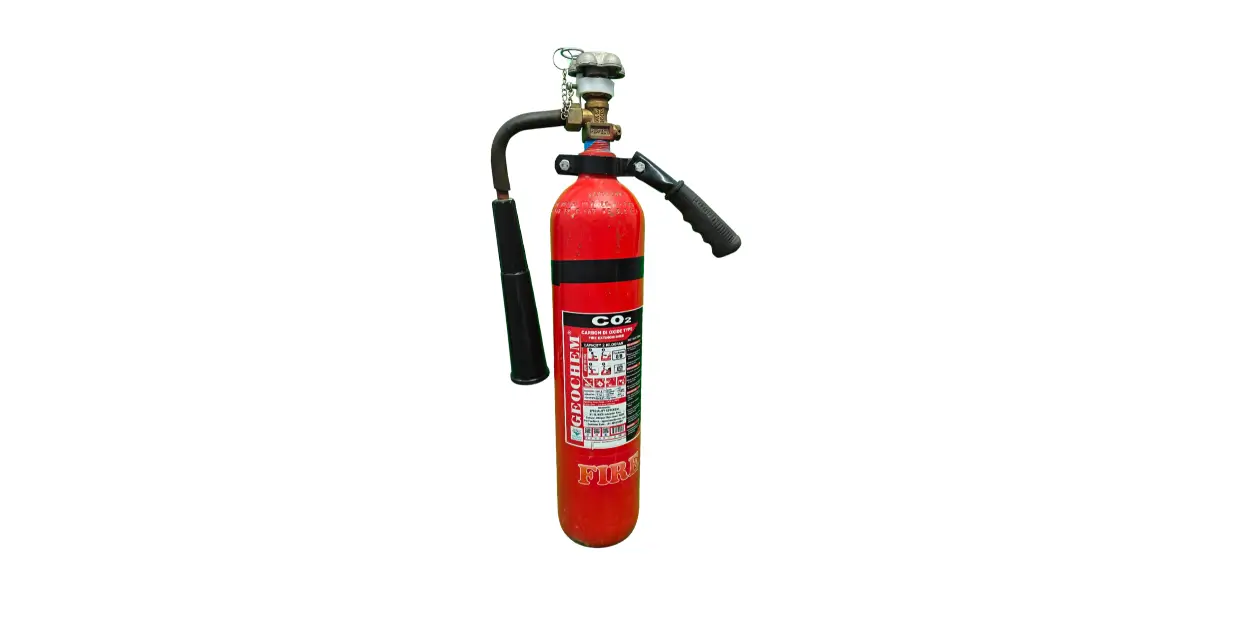
CO2 Fire Extinguisher
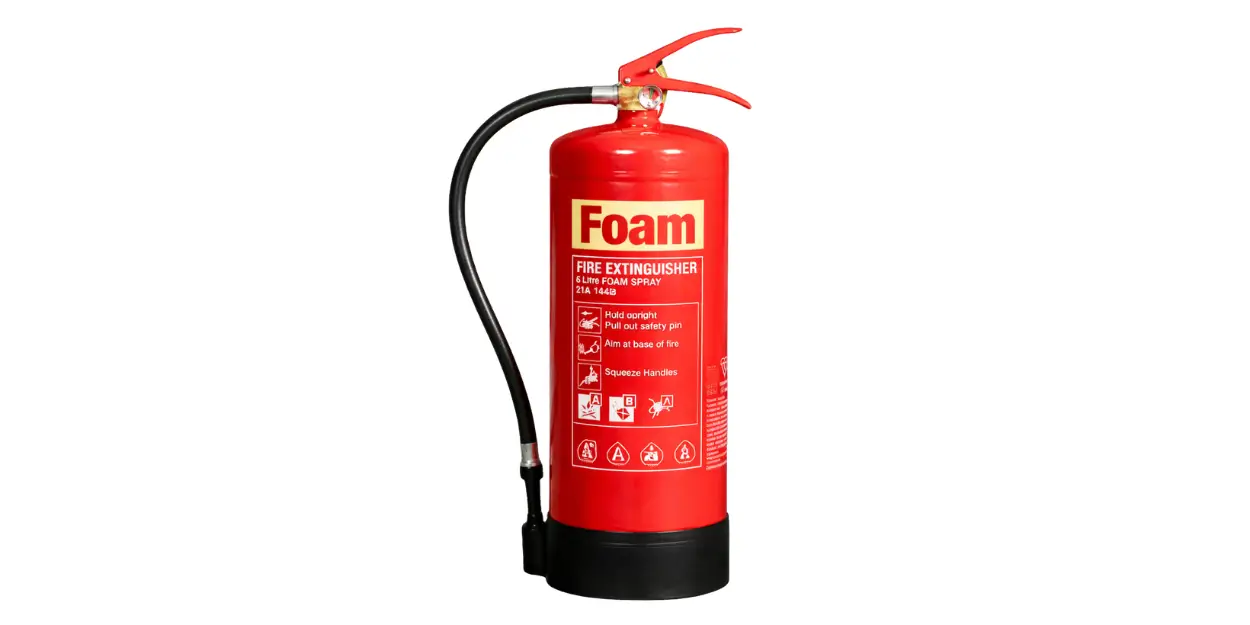
AFFF Foam Fire Extinguisher
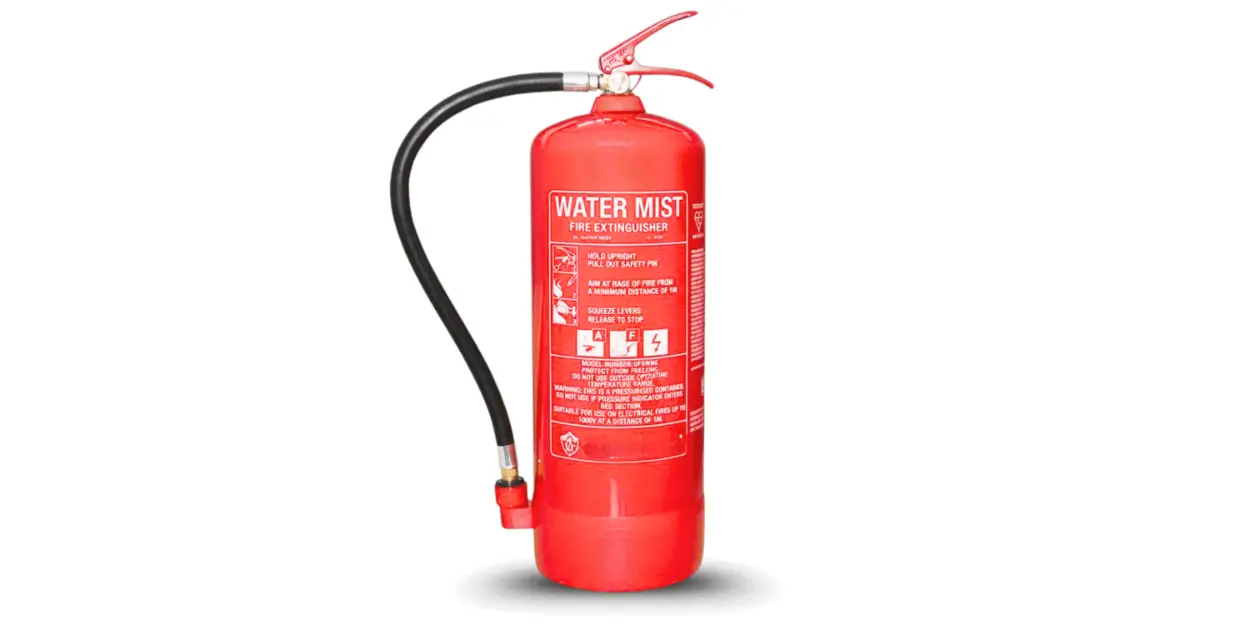
Water Fire Extinguisher
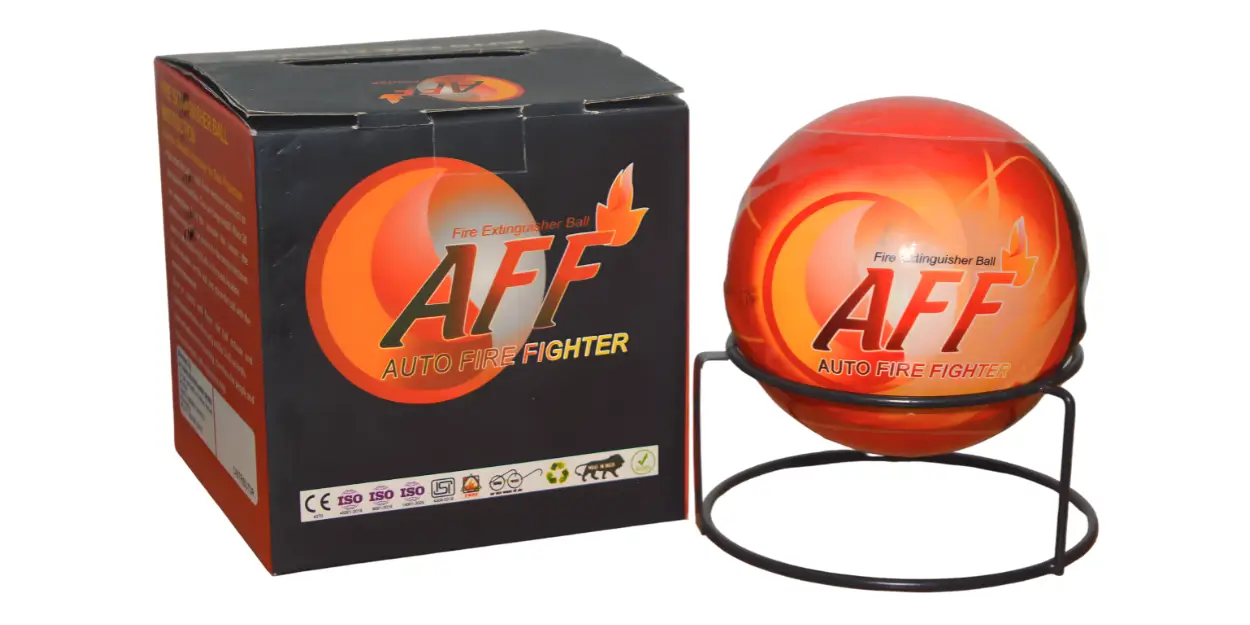
Fire Extinguisher Ball
Which Fire Extinguisher Is Best for Home Use?
Different fire extinguishers are designed for different fire risks. Electrical appliances, cooking oil fires, and burning furniture require different extinguishing agents. The table below compares the most common options so you can choose the right fire extinguisher for home protection.
| Type of Fire Extinguisher | Fire Classes | Best Location in Home | Leaves Residue | Typical Size |
|---|---|---|---|---|
| ABC Dry Powder | Class A, B, C | Living room, hallway, garage | Yes | 2kg–4kg |
| CO2 | Class B, C | Electrical panels, inverter area, office | No | 2kg–4.5kg |
| AFFF Foam | Class A, B | Kitchen, garage, fuel storage | Minimal | 2kg–6kg |
| Water | Class A | Bedrooms, furniture areas | No | 6L–9L |
| Fire Extinguisher Ball | Class A, B, C | Kitchen shelf, electrical areas | No | 1.3kg |
Features That Make Our Fire Extinguishers Ideal for Home Use
Speciality Geochem has manufactured certified fire safety equipment in Udaipur since 1996. Our residential fire extinguisher models are designed to meet Bureau of Indian Standards requirements while remaining practical for everyday household protection.
Meets Bureau of Indian Standards requirements with ISI certification and internationally recognised CE safety compliance.
Pin and nozzle mechanism designed for quick activation with a clear pressure gauge for easy operation.
Designed for easy wall mounting in kitchens, hallways, garages, and utility areas without occupying floor space.
Typical service life ranges from five to ten years with proper storage and regular inspection.
Manufactured directly by Speciality Geochem in India, helping reduce distributor markup and overall cost.
Speciality Geochem supplies ISI and CE certified fire extinguishers manufactured in India since 1996 and delivered across the country. Choosing Speciality Geochem as your fire extinguisher for home is ideal.
Fire Safety Combo Kit for Complete Home Protection
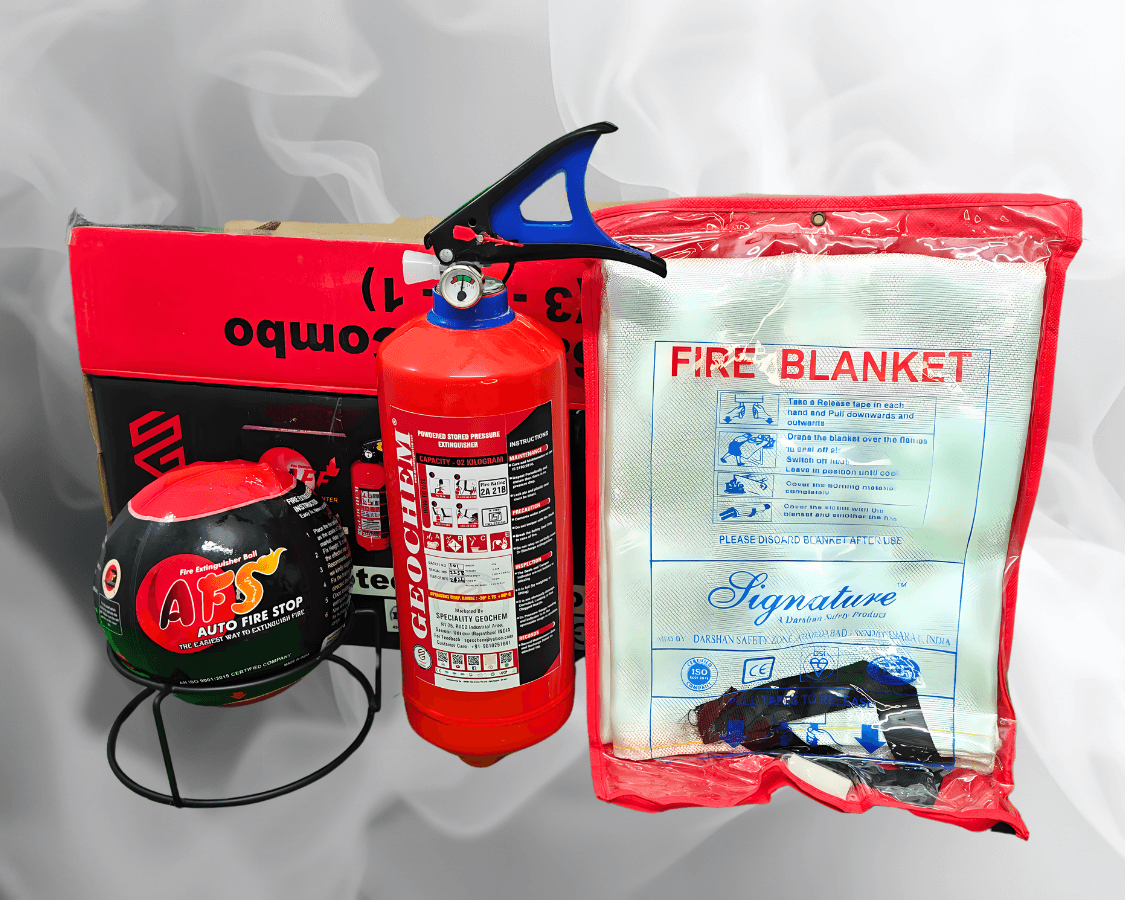
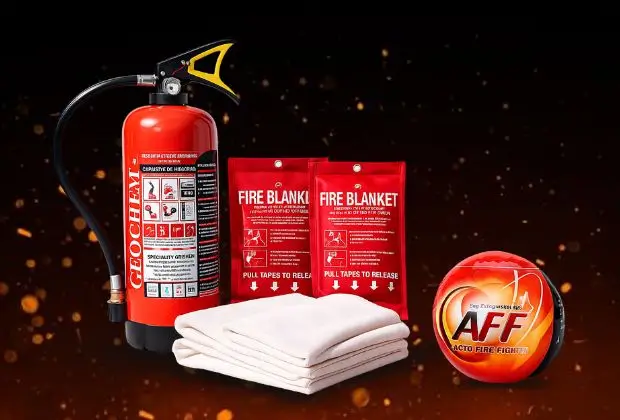
Many households prefer a complete fire protection solution instead of purchasing equipment separately. The Speciality Geochem Fire Safety Combo 3-in-1 Kit combines essential residential fire safety tools designed to handle the most common household fire risks.
• ABC Dry Powder Fire Extinguisher: Controls Class A, B, and C fires including wood, paper, flammable liquids, and electrical equipment.
• Fire Blanket for Kitchen Safety: Quickly smothers small cooking oil or pan fires without spreading flames.
• Automatic Fire Extinguisher Ball: Activates when exposed to fire and releases extinguishing powder within seconds.
• Layered Home Fire Protection: Designed to protect kitchens, apartments, garages, and electrical areas.
• Simple and Ready to Use: Easy to install and suitable for residential environments where quick response is critical.
Where and How to Install Fire Extinguishers in Your Home
Choosing the right fire extinguisher for home protection is only the first step. Placement determines whether you can reach the extinguisher quickly when a fire starts. Fire safety guidelines recommend installing extinguishers in visible locations close to high-risk areas but not directly beside the source of the fire.
A good rule is simple. You should be able to reach a household fire extinguisher within a few seconds from any major room in your home. Multi-storey houses should install at least one extinguisher on each floor so it remains accessible during an emergency.
Below are the most practical locations where homeowners should install a fire extinguisher for home use.

Kitchen
Install a fire extinguisher for home near the kitchen exit so you can reach it quickly during cooking or oil fires.

Living Room
Place an extinguisher near the entrance or close to TVs, heaters, and electrical equipment where fires may start.

Garage
Keep an extinguisher near the garage door if fuel, paint, or power tools increase the risk of sparks or fire.

Bedroom
Install one extinguisher on each floor so sleeping areas remain protected during nighttime emergencies.

Electrical Panel
Keep a CO2 fire extinguisher near the inverter or electrical panel to safely handle electrical fires.

Hallway
Mount a household fire extinguisher in the hallway so it remains visible and reachable from multiple rooms.
Mount the extinguisher at an accessible height and ensure everyone in the house knows how to use it. Quick access to a fire extinguisher for home can stop a small fire before it spreads.
How to Choose the Best Fire Extinguisher for Your Home
Choosing the right fire extinguisher for home protection depends on the type of fire risks present in your house. Kitchens, electrical appliances, and storage areas create different hazards, so selecting the correct extinguisher type is important.
- Fire risk in each area:Kitchens often need ABC or AFFF extinguishers for oil fires, while rooms with electronics benefit from CO2 types.
- Ease of operation:Choose a model with a simple pin-and-nozzle system and a visible pressure gauge for quick use.
- Size and weight:Most homes use 2kg–4kg extinguishers, which provide enough discharge time while remaining easy to handle.
- Safety certifications:Always select extinguishers with ISI certification under Bureau of Indian Standards.
- Maintenance:Residential extinguishers typically last five to ten years with periodic inspection.
Why Choose Speciality Geochem for the Best Fire Extinguisher For Your Home?
Speciality Geochem has manufactured fire safety equipment in Udaipur, Rajasthan since 1996. Our extinguishers meet Bureau of Indian Standards (BIS) requirements with ISI certification and CE compliance for dependable residential protection.
We manufacture a complete range including ABC dry powder, CO2, AFFF foam, water extinguishers, and fire extinguisher balls designed for common household fire risks such as cooking oil fires and electrical faults.
Homeowners and distributors across India rely on Speciality Geochem for direct manufacturer pricing, consistent quality, and over 28 years of fire safety manufacturing experience.
Fire Extinguisher Maintenance for Home Safety
A fire extinguisher for home must be maintained regularly to remain reliable during an emergency. Even certified extinguishers can fail if pressure drops, nozzles clog, or servicing is ignored. A few simple checks ensure your equipment stays ready when needed.

Monthly Pressure Gauge Check
Inspect the pressure gauge once every month. The needle should remain in the green zone, which indicates proper pressure inside the cylinder.

Annual Inspection
A professional inspection should be performed once every year to verify the internal components, extinguishing agent, and cylinder condition.

Refill After Any Use
A household fire extinguisher must be refilled immediately after use, even if only a small amount was discharged. Low pressure reduces performance during the next emergency.

Expiry and Replacement Timeline
Most residential extinguishers have a service life of five to ten years depending on the type and maintenance schedule. Replace units that show corrosion, damage, or pressure loss.
Regular inspection keeps your fire extinguisher for home use reliable and ready to control small fires before they spread.
Certifications for Our fire extinguisher for house
Speciality Geochem follows internationally recognized manufacturing and testing standards to ensure every fire extinguisher meets strict safety and performance requirements.


Customer Reviews for Our Fire Extinguishers and Home Fire Safety Equipment
Customers across India rely on Speciality Geochem for reliable fire safety equipment designed for homes, offices, and industrial facilities. These reviews reflect real experiences with our fire extinguishers, fire blankets, and automatic fire suppression products used in everyday fire risk situations.
Choosing the Right Fire Extinguisher for Your Home
A properly selected fire extinguisher for home gives you the ability to control small fires before they spread across rooms or floors. Many residential fires begin with everyday incidents such as cooking oil flare-ups, electrical faults, or overheating appliances.
Installing the correct extinguisher type in visible and accessible locations improves your response time during an emergency. Equipment that meets Bureau of Indian Standards requirements with ISI certification ensures dependable performance when it matters most.
Speciality Geochem has manufactured fire safety equipment in Udaipur, Rajasthan since 1996, supplying ISI and CE certified extinguishers designed for real residential fire risks.
Selecting the right fire extinguisher for home use, installing it correctly, and inspecting it regularly helps ensure your equipment is ready whenever it is needed.
FAQ
The best fire extinguisher for home is usually an ABC dry powder model because it handles Class A, B, and C fires. These include common household fire sources such as wood, paper, flammable liquids, and electrical equipment. Many homes also install a CO2 extinguisher near electrical panels and a foam extinguisher in the kitchen for additional protection.
Most homes use 2kg to 4kg fire extinguishers because they provide enough discharge time while remaining easy to handle. Smaller units such as 1kg models may discharge too quickly during a fire emergency. Larger homes or multi-storey houses may require multiple extinguishers placed on different floors.
A typical home should have at least one extinguisher on each floor. Kitchens, garages, and areas with electrical equipment are considered higher-risk locations and should always have easy access to a fire extinguisher. Proper placement improves response time during the first few seconds of a fire.
Fire extinguishers should be installed in visible and accessible locations such as kitchens, hallways, garages, and near electrical panels. Mounting them around 1 to 1.5 metres above floor level keeps them easy to reach during an emergency.
Yes, but only certain types are safe for electrical fires. CO2 and ABC dry powder extinguishers are commonly used because they do not conduct electricity. Water extinguishers should never be used on electrical equipment.
Most residential fire extinguishers have a service life of five to ten years, depending on the type and maintenance schedule. Regular inspections and servicing help ensure the extinguisher remains reliable.
Yes, home fire extinguishers should be checked regularly to ensure they remain ready for use. A monthly inspection should confirm the pressure gauge is in the green zone and the safety pin is intact.
Yes, extinguishers can usually be refilled after use. Even partial discharge reduces internal pressure, so the extinguisher should be refilled immediately after it has been activated.
The ISI mark indicates the product meets safety standards defined by the Bureau of Indian Standards (BIS). Certified extinguishers undergo testing to ensure reliable performance during fire emergencies.
Fire extinguishers are not legally required in every private residence. However, many housing societies and safety guidelines recommend installing them as a basic fire protection measure.
Common residential extinguishers include ABC dry powder, CO2, AFFF foam, and water extinguishers. Each type is designed to handle specific classes of fire.
ABC extinguishers control Class A, B, and C fires, including wood, flammable liquids, and electrical equipment. CO2 extinguishers are mainly used for electrical and flammable liquid fires because they leave no residue.
Yes, kitchens are one of the most important places to install a fire extinguisher because cooking oil and gas leaks are common fire risks. The extinguisher should be placed near the kitchen exit, not directly beside the stove.
A fire extinguisher ball is an automatic fire suppression device that activates when exposed to flames. It releases extinguishing powder within seconds and is often placed near kitchens or electrical panels.
The most common causes of residential fires include cooking accidents, electrical faults, gas leaks, and overheating appliances. These risks make having a fire extinguisher at home important.
A small fire can double in size roughly every 60 seconds during the early stage. This is why having a fire extinguisher within reach is important for controlling flames before they spread.
Yes, most household extinguishers are designed with a simple pin and nozzle mechanism so they can be operated easily. Choosing a lightweight model such as a 2kg unit makes it easier for different family members to handle.
Kitchens often use AFFF foam or ABC powder extinguishers because they can handle cooking oil and flammable liquid fires. Foam extinguishers are especially effective at preventing re-ignition.
Yes, garages should always have a fire extinguisher because vehicles, fuel containers, and electrical tools increase fire risk. ABC extinguishers are commonly used in these areas.
Prices vary depending on the type and size. Small residential extinguishers typically range from ₹600 to ₹2,500, while larger units may cost more.
Most residential extinguishers weigh 2kg to 4kg, making them easy to handle during emergencies while providing enough extinguishing capacity.
Yes, extinguishers can be used multiple times if they are refilled and serviced properly after each discharge.
ABC extinguishers control Class A fires (wood and paper), Class B fires (flammable liquids), and Class C fires (electrical equipment).
An expired extinguisher may lose pressure or fail to discharge properly. It should be replaced or professionally serviced once it reaches the end of its service life.
Fire extinguishers can be purchased from certified fire safety equipment manufacturers and distributors. Buying directly from a manufacturer ensures the extinguisher meets BIS, ISI, and safety certification standards.
Get In Touch With Us
103, Ostwal Plaza 2, Sundarwas,
Udaipur (Raj.) India
+91-9799661841
+91-9680211841
sgeochem@yahoo.com